
Crab Max© Drone Crabbing
Drone crabbing is an exciting new crabbing method for beach-based crabbers. In Oregon, one can crab for the beach in the ocean 365 days a year. Commercial Crabbers are limited when they can crab, but with a drone, you are not Limited.
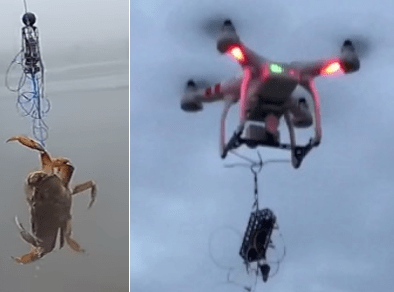
The increased distance a drone can achieve will lead to better crabs, less time, and less bait wasted. Imagine casting your bait out from the beach for hundreds of meters and dropping it right into a hole full of crabs.
The picture shows a drone taking a crab trap to be dropped 300 ft from the beach.
So that all sounds good. Almost too good to be true.
Downsides to drone crabbing.
As with everything in life, there are pros and cons. In this case, we believe the pros outweigh the cons.
Nevertheless, let’s look at a few cons. One is having to buy a drone. A cheap drone may not have the required GPS functions, lifting capacity, and control range for drone crabbing. Another con is the risk of losing the expensive drone due to unforeseen line tangles, technical failures, or piloting errors.
Getting a waterproof drone made specifically for crabbing could somewhat reduce this risk. But crashing it 300 meters offshore could still mean you will never see it again, even if it’s waterproof and floats.
Another con is that you might not be allowed to fly a drone wherever and whenever you want. People get annoyed by drones. Drones, weekends, and busy beaches don’t match well.
So, after these considerations, let’s look at what’s needed to get into drone crabbing.
There are only a few suitable drones available. The thing they all have in common is a relatively high price tag.
The most expensive drones, such as the Splash drone, are specifically made for crabbing.
The splash drone is waterproof with a built-in release mechanism for dropping your trap.
If those specialized crabbing drones seem too expensive.
The Phantom 3 Standard
The phantoms are not waterproof but have a good lifting capacity of about 5 lbs and a control range of over one-half mile.
We chose this model because of its lifting capacity and price. We will lift a special Crab Mini-Max Trap weighing about one (1) lb.
A larger model is thrown by hand from a beach or a dock with a handline. CLICK HERE to see
Crab Max© … does Catch Crabs … 24 years as a proven Crab performer
“Once you Crab Max©, you never go Back”
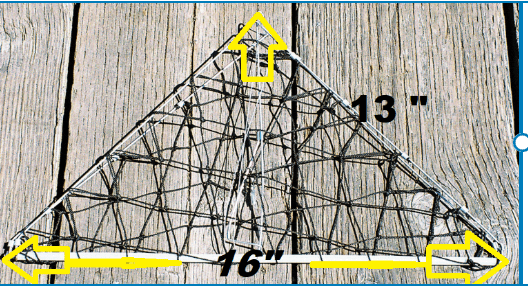
- Heavy-duty nylon netting
- Stainless steel frame
- Equipped with Chicken Spike
- 169 square inches of Crab-catching area
For more details, CLICK HERE or on the picture
Crab Max Mini© is based on the proven design of the successful Crab Max© Trap. The Crab Max Mini© is a lightweight triangle-shaped stainless steel frame that can easily be cast with your fishing rod. Or, in this case, a drone. Let it soak on the floor and reel in your catch!
Imagine viewing a live image streamed from the drone up to a half mile away on the DJI Go app using your mobile phone or tablet.
GPS-assisted flight features let you concentrate on getting great images while the drone helps you fly safely.
The Point of Interest, Follow Me, and Waypoints modes allow you to achieve advanced camera perspectives.
The intelligent battery allows you to fly for up to 25 minutes.
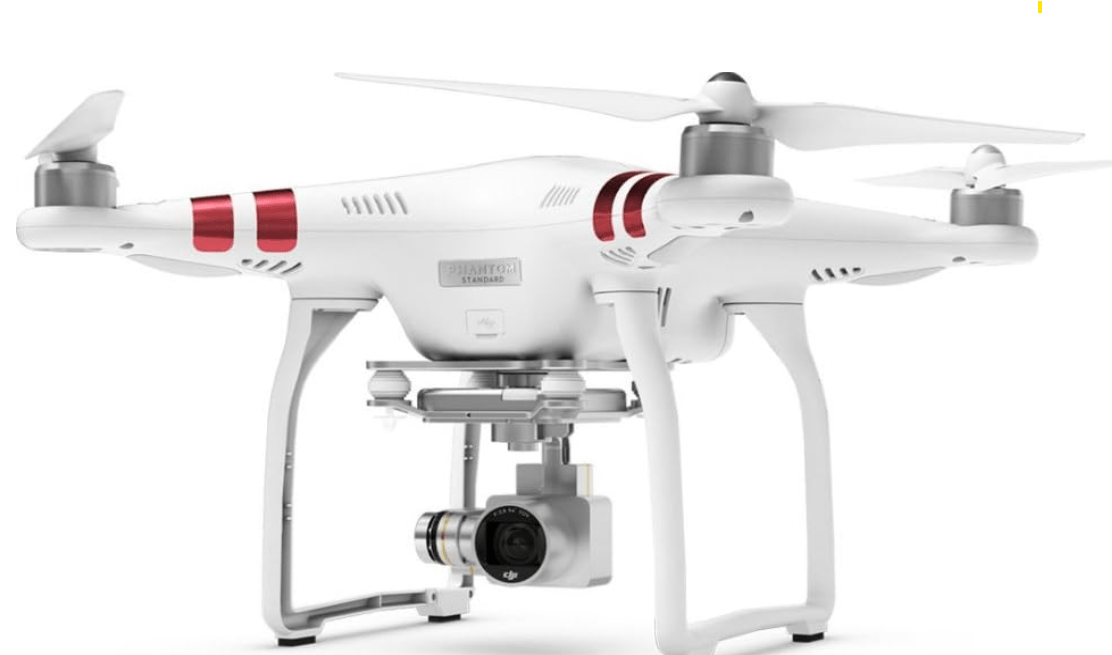
Unfortunately, the phantom drones don’t have a built-in bait release mechanism. It’s possible to buy them aftermarket or – if you’re technically minded – to build one yourself.
Other drones on the market could be used for crabbing, but the above two options are the best.
If money is not an issue, we recommend the Splash drone, which costs $3000+. And no matter which drone you get, you’ll need at least one or two spare batteries.
Drones don’t fly for long. The DJI can fly for about 25 minutes on one charge. It’s enough for 3-4 longer casts. With two batteries, you’ll get 6-8 casts for Crabs. It doesn’t seem like a lot. But it’s usually enough to catch Crabs because you can crab in more productive water.
Less Expensive Drones
The expensive drones do not have the lifting capacity, so the Crab Trap has to be lighter. We do not use a trap but a Crab Snare. At this time, we do not recommend any brand of drone. We are experimenting with several of drones and trying to reduce the weight of the Crab Snare.
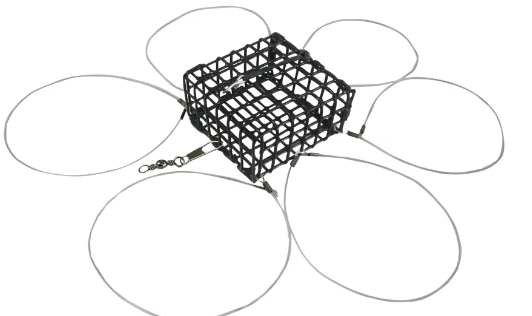
Typically, Crab Snaring is done with a fishing pole. The crab comes for bait in the box, and as it walks away, it gets tampered with in one of the loops.
Usually, a fishing pole can only cast the snare 50-100 ft, but with a drone, the distance limit is the length of your line.
A 30lb test line and higher is good, but 20 would work too as the minimum—just be careful not to break the line when casting! That snare + weight + bait makes it really heavy. Once you cast out the line, leave it for ~8 minutes and see if you get one. If not, increase the time to 9-10 minutes. A 10-foot pole and heavy reel are pretty essential for crabbing with a pole.
The Result
Crab one (1) hour before low or high tide and one (1) hour after.
3oz circle weights + 5oz pyramid if the current is strong.
10+ ft pole, 20lb braid, heavy reel.
Check lines every 8 min.
Bring home the crabs.
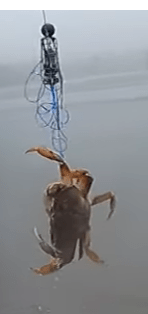
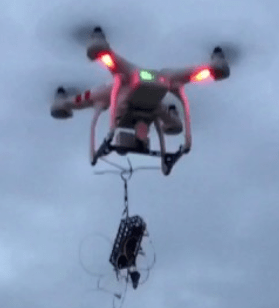
The tide and current are the most significant factors when crab snaring. Ideally, you should shoot to arrive one hour before a +1.0 low or high tide and one hour or so until it gets too rough. If the waves crash too hard, it will likely put slack on your line and the snare, causing the snare loop to open and possibly losing the crab. The calmer the water, the better for crabs – so shoot for going around a low tide.
Factors that make a good Crabbing Drone
Drones are generally categorized into four classes: toy, mini, hobby, and professional. Those who are brand new to drones usually prefer a toy drone so that if they crash it, replacing it is not expensive.
If these pilot pilots continue flying their drones, they will eventually upgrade to hobby drones. For many drone pilots, that’s the type of drone they always favor, but those working with drones might have a professional-grade drone.
We’re telling you this because a drone’s carrying capacity varies based on its categorization. Toy drones aren’t meant to carry much weight, so you’re lucky if the drone can tote even half a pound.
As you get into professional drones, the payload increases to as much as 25 pounds or even 500 pounds, 227 kilograms.
What factors influence a drone’s payload besides its type?
Drone weight
A toy drone can’t carry much weight because it’s cheap and because these drones are usually quite small. Mini drones will have similarly low payloads for that exact reason: there’s not much to them.
Professional drones can carry the most weight due to their often hefty size. These drones are designed for mine surveying, search and rescue, and other Heavy-Duty Drone Applications.
A toy drone can’t carry much weight because it’s cheap and because these drones are usually quite small. Mini drones will have similarly low payloads for that exact reason: there’s not much to them.
Due to their often hefty size, professional drones can carry the most weight. These drones are designed for mine surveying, search and rescue, and other hard jobs, so they must be built tough.
Battery weight
A drone’s payload encompasses everything it carries, including batteries. If your drone has many batteries or the battery pack is heavy, less weight is available for carrying accessories.
Propeller number and size
Propellers are another factor in your drone’s carrying capacity. Propellers can generate lift, but they’ll be heavier if they’re too big. Like everything else, the drone has to support the props’ weight, reducing its payload.
The number of propellers can affect the drone in the same way. The greater the number of props, the heavier the props are generally, although more motors and props mean greater lift.
Motor strength
A souped-up drone motor can fly a drone at its full payload without wavering. Cheap motors will begin to falter if you attach a smartphone carrying case to your drone.
Mini Drones
| Drone Model | Payload Capacity |
| DJI Mini 2 | 0.53 pounds (0.24 kilograms) |
| DJI Mini SE | 0.18 pounds (0.08 kilograms) |
| DJI Tello | 0.17 pounds (0.07 kilograms) |
Hobby Drones
| Drone Model | Payload Capacit |
| Yuneec Tornado H920 | 6 pounds (2.72 kilograms) |
| DJI Inspire 2 | 9.37 pounds (4.25 kilograms) |
| DJI Mavic Pro | 2.2 pounds (0.99 kilograms) |
Professional Drones
| Drone Model | Payload Capacity |
| Freefly Systems Alta 8 | 19.8 pounds (9 kilograms |
| DJI Phantom Standard | 6 pounds (2.72 kilograms) |
| DJI Phantom Pro 4 | 6 pounds (2.72 kilograms) |
| DJI Matrice 600 Pro | 15 pounds (6.80 kilograms) |
| OnyxStar HYDRA-12 | 26.5 pounds (12 kilograms) |
Crab Trap/Snare Release Mechanisms
Push Button Systems
Since DJI is the leading consumer drone manufacturer in the world, Gannets’ SkyClip bait releases mainly cater to DJI, but they also make bait release mechanisms for many other drones. Their most popular drone release systems attach to the DJI Phantom and DJI Mavic drone series. Gannet made a drone bait release system that attaches to the drone in a way that doesn’t interfere with any of these sensors yet is still effective.
Release steps:
- Clip the line in the bait release’s slot until it locks in place. Then, fly the drone to the drop zone.
- Take off the drone gently and reach a defined safety height over 20 meters above sea level.
- Fly the drone out over the water at maximum speed. As a safety precaution, ensure your line does not touch the water during the flight. Also, make sure that the line is taught during the flight.
- Once you reach the drop zone, close the lever of the reel mechanism so that the line stops. At this point, the line should be released.
Manual Release Systems
Scotty #1181 Mini Power Grip Plus Line Release is the one we use
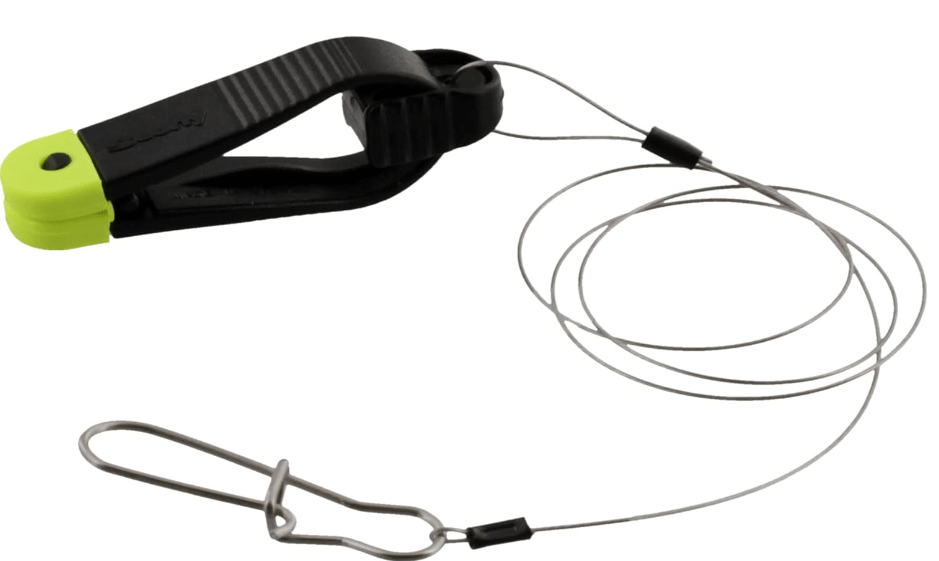
- Power Grip Plus with 18” Leader and Cannonball Snap
- A crab line is gripped between the soft pads, and variable release tension is attained by moving the line in or out of the jaws.
- The “tension adjuster” doubles the holding power if needed.
How to release fishing line from drone:
- Step 1: When ready to crab, just clip the downrigger release clip to the fishing line connecting the trap and the fishing rod.

- Step 2: Open up the bail on the fishing rod.
- Step 3: Fly the drone as far as you need, leaving the bail open to allow the line to flow.
- Step 4: When you reach the area where you want to drop your line, just flip the bail over on the line.
- Step 5: Once that is done, fly the drone further away. The clip will release the line when it feels more tension.
Suitable Rod and Reel
Reel
If you already have a surfcasting outfit, you could probably use that. The biggest consideration is that the reel must have a large line capacity. In our opinion, you need a minimum of 400 meters of line.
If the reel is spooled up with a braided crabbing line, it will hold more lines than a mono line.
Crabbing with a braided line on a long-distance trip is also much more fun, as the line is not stretched, and you can feel every bite. Therefore, we would not use a monofilament line for drone crabbing.
We recommend a large surfcasting reel, preferably with a free-spool function like a Shimano bait runner, spooled with a 20-50lbs braided line.
Or even better, a big overhead reel (Shimano tld25) with 20-50lbs braided line. With an overhead reel, the chances of line tangles and resulting drone crashes are much reduced. The bigger reels can hold a high capacity for crabbing lines. Get a reel that can hold at least 400 meters of braided line.
The downside of an overhead reel is that it’s not very good for old-fashioned casting. So, if you’re looking for a multi-purpose reel, a surfcasting reel is a bit more versatile and can also be used for beach crabbing, rock crabbing, boat crabbing, etc.
ROD
Use a standard 10-foot surfcasting rod. Although you don’t need a surfcasting rod for drone crabbing, a long rod is better at keeping your line above the waves when flying out your baited drone. Large waves crashing down on your line with the drone still attached could easily lead to a quick, unplanned end to your drone-crabbing career.
For surfing beaches, Use a long surfcasting rod. It doesn’t matter much for Drone Crabbing with calmer beaches; a shorter rod can be used. You gotta make sure that the rod is strong enough to land some potential net full of Crabs.
Next, you need a rod holder or beach spike. You only have two hands. Once you’re ready to fly out your bait, you won’t have a free hand to hold your rod.
So, ensure you have a keen helper or a more reliable rod holder.
Use a medium grabnel sinker and put some tasty bait on the bait box, as you would when surfcasting.
You are ready to start the drone. It’s best to turn it on while you load the bait box.
The motors need a little time to warm up before you can fly.
Once the drone is ready, start it and fly it to the water’s edge. Take your crab gear. Have your reel in free-spool or, at minimum, drag and walk toward the drone. Control the height of the drone with the controller in your other hand.
We use a bit of bent wire that I attach to the sinker. The bent end of the wire hangs over the bolt of the release mechanism.
As we hang the wire onto the release mechanism, we fly the drone and ensure it pulls the line quickly.
If everything looks good, We walk back to our rod to keep an eye on the reel.
Then, we fly the drone about half-speed forward to wherever I want to drop the bait, up to 300 meters offshore.
Avoid flying the drone too fast, as this could result in line loops and tangles. You want a constant slow pull on your line to prevent tangles with just a little tension.
At 300 meters out, you can hardly see the drone. But you’ll feel a tuck on the rod when you open the release mechanism, and the bait falls into the water. Then, I just hit the “return to home” button on the drone. It will come back automatically. I wind in some slack line while it’s on its way back.
We land the drone manually and turn it off once it’s back overhead. Then, back on the rod, waiting for bites.
Once you connect, you reel in over 300 feet of line. It takes some time, but it’s exciting.
When getting started with drone crabbing, a lot is going on. Flying the drone and caring for the bait and lines may not sound complicated, but they can be quite a handful on the first few tries.
With some practice, you become more comfortable with the setup, and everything becomes streamlined and easier to control. Crabbing with a drone is fun, and you won’t get bored quickly.
- 82 Siletz Hwy
- Lincoln City, Oregon
- 541-765-2109
For people who like fresh crab but do not like to Crab

Store Location
- 82 Siletz Hwy
- 8 AM – DARK
- 365 days a year
- Lincoln City, OR 97467
- 541-765-2109
- nextday@vol.com
Main Office
- 1113 N Hwy 101
- 8 AM – 10 PM (phone only)
- 365 days a year
- Depoe Bay, OR 97341
- 541-765-2109
- nextday@vol.com
2 comments on “Crab Max© Drone Crabbing”
82 Siletz Hwy Lincoln City OR 97367

 Living Center Oregon
Pingback: Crab Max “Crab Max FOREVER” … Never buy another crab trap. | Living Center Oregon
Pingback: Crab Snares that Fly | Living Center Oregon