
Canning or Smoking Fish…. an excellent Keto Lifestyle Food
Fall Chinook fishing is picking up on the mid-coast estuaries, including the Yaquina, Alsea, and Siletz Bay & River.
Fishing will continue to improve through September as more fish move into the tidewater to stage until significant rain moves them upstream.
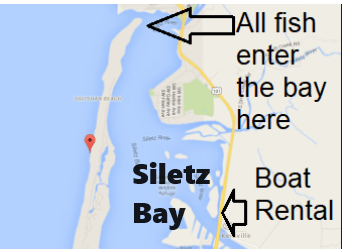
Before they enter fresh water to spawn, ocean coho and Chinook stage in coastal waters near the mouths of bays and rivers. Chinook salmon are readily available. Many of the ocean salmon seasons are based on quotas and may close early, so it’s important to double-check the status of the fishery before fishing.
Preliminary estimated effort and catch for the week of August 5 -11 for Charter Fishing Trips.
Charleston: 227 salmon angler trips, 67 coho landed, 0.29 salmon per angler.
Garibaldi: 766 salmon angler trips, 606 coho and 54 Chinook landed, 0.86 salmon per angler.
Pacific City: 402 salmon angler trips, 209 coho and 16 Chinook landed, 0.56 salmon per angler.
Depoe Bay: 470 salmon angler trips, 350 coho and 23 Chinook landed, 0.76 salmon per angler.
Newport: 2,014 salmon angler trips, 1,949 coho and 66 Chinook landed, 1 salmon per angler.
Winchester Bay: 1,110 salmon angler trips, 727 coho and 62 Chinook landed, 0.71 salmon per angler.
Bank Fishing
Salmon History on the Oregon Coast
The first salmon baking and smoking were done by Native tribes of the Coastal Indians. They cut small green saplings, split them carefully along most of their length, and used them as holding racks for sides of salmon cut from freshly caught fish. Cross-braced with strong twigs, the racks were driven into the sand, and the fish was cooked over burning logs.
In 1931, the fish fry was held at The Bridge Lunch restaurant, the future location of the existing Spouting Horn Restaurant.
In 1940, an event called “Indian Summer and Homecoming” was held at Government Point (now Boiler Bay State Park) for Indians of the Northwest. Three hundred (300) Indians participated, and an Indian-style salmon barbeque was held.
In 1956, the local Chamber of Commerce sponsored the first annual “Indian Style Salmon Bake.” Residents held a salmon derby before the bake. Fish caught in the derby were cooked for the event. The fish was cooked for about four hours over a 20-foot log fire.
Siletz River has lots of Salmon and is only 5 miles from Depoe Bay, Oregon
The Siletz River and Bay can be excellent producers of fall Chinook salmon on the Central Oregon Coast.
In recent years, Chinook catches have bounced between 2,000 and 5,000 fall salmon as the cycle cycles up and down.
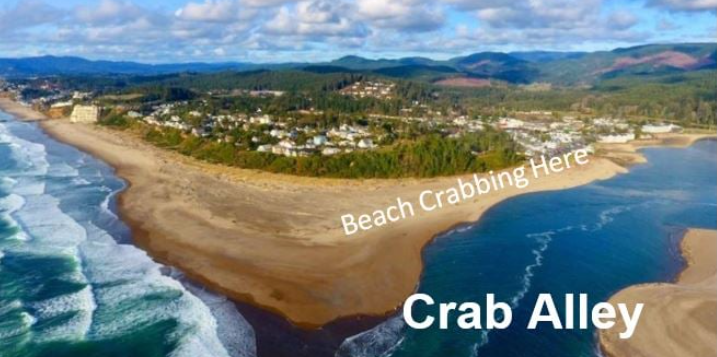
The Siletz enters the Pacific Ocean at the southern end of Lincoln City. Salmon fishing and beach Crabbing can be done from the beach where the Pacific Ocean enters Siletz Bay.
Like most Oregon coast Chinook salmon fisheries, the Siletz’s catch is best in September and October, with most fish landing in the tidewater areas.
Siletz Bay proper, west of Highway 101 between the Taft end of Lincoln City and Salishan Resort, is fished but not as popularly as many other Oregon Coast bays.
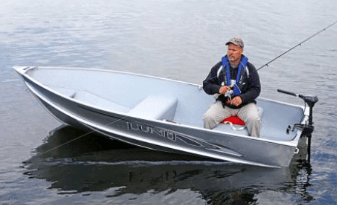
Boaters often find access to good fishing on the lower tidewater near Kernville, just inland from the main coastal highway.
Two (2) – (3) person Fishing Boats with trolling motors can be rented at Hwy 101 and Hwy 229 at Kernville.
Six (6) – (8) person fishing cats with trolling motors can be rented at Hwy 101 and Hwy 229 at Kernville.
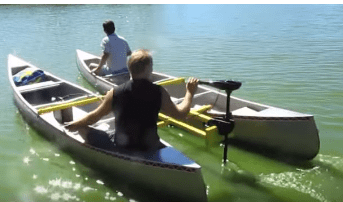
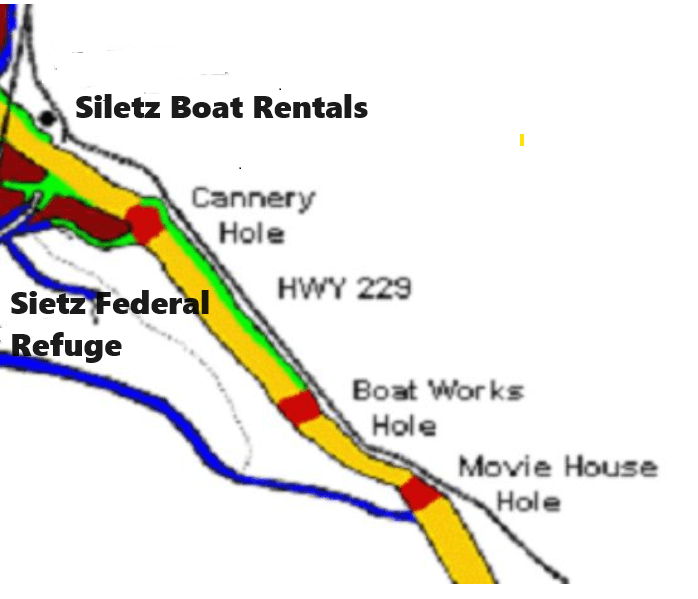
There are additional launches not far upstream from there along Highway 229. Trollers pull herring or spinners through the broader sections, while bait and bobber fishing is popular in the narrower upper tidewater.
When rains give the Siletz a good lift, often in October, good numbers of fall Chinook will enter the free-flowing river (near Strom Park).
The best river angling is in the lower reaches near the intersection of Hwy 101 and Hwy 124. Most of the Chinook are caught below the community of Siletz, where bank access is somewhat limited due to private property.
Spring Chinook
The Siletz is a rarity in the northern half of the coast because it has a wild run of spring Chinook salmon.
These fish tend to be caught from June to summer, overlapping with the Siletz River’s more extensive summer steelhead fishery. At our latest update, ODFW has applied strict annual limits on wild spring Chinook that may be retained, so check the regulations for the latest updates.
In recent years, the number of spring Chinook has been in the hundreds, roughly a tenth of the fall harvest.
Coho Salmon
Though not usually a coho salmon fishery, part of this system may be opened to retain wild coho in years of expected abundance. The season is likely to occur in September and October and is confined to specific boundaries. Harvests will be limited.
Watch for wild coho fisheries to be announced before the season begins, typically posting sometime in August.
Best River Levels
Watch the river gauge closely to determine where and when to fish, particularly for fall Chinook runs.
The tidewater section is often best when the river is running low because fish congregate here, waiting for the rain to raise the river level. If the river level is below 4 feet or even a bit higher, stick to trolling or bait and bobber fishing tidewater in the early fall.
When the river is above 4 feet, the river becomes at least an option. Most river anglers consider the river to be in perfect shape when it is close to 5.5 feet and decent up to 7 feet.
Plunking with bait is better in higher water, peaking at 7 or 7.5 feet or a little higher and worthwhile to about 8.5 feet.
Once you catch your salmon, you have two ways of preparing it: bake or smoke. Typically, a smoked fillet has been cured and is hot or cold-smoked. Due to its moderately high price, smoked salmon is considered a delicacy.
We will cold smoke your salmon, rent our smoker, or we will teach you …. Call 541-765-2109 for details.
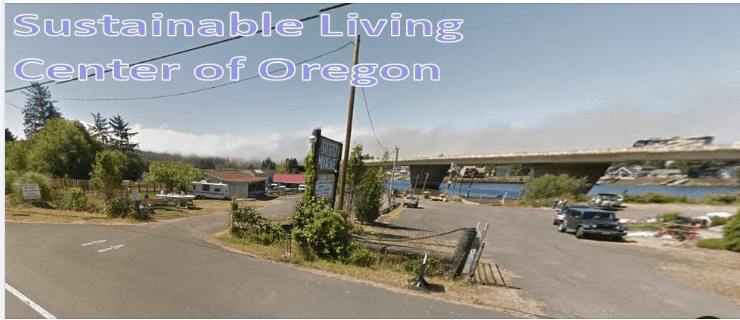
Sustainable Living Center of Oregon
82 Siletz Hwy
Lincoln City, OR 97367
541-765-2109
The mission of the Sustainable Living Center is to find ways to have a sustainable and quality life in these challenging times. We are an Education and Research Center based in Lincoln City, Oregon. The Center uses Permaculture, Off-Grid techniques, and Technology to find DO IT YOUR (DIY) methods of food production, water harvesting, energy production, shelter, and health (keto lifestyle)
The Center is financially sustainable because it rents Kayaks, Boats, and Crab Traps, offers DIY workshops, and offers Smoking and Food-Canning services.
We are self-directed and answer to no group or government agency. Although drugs are legal in the state of Oregon, all members of the Center are drug-free.
82 Siletz Hwy Lincoln City OR 97367

 Living Center Oregon
You must be logged in to post a comment.