
Crab Max© … Snares that Fly
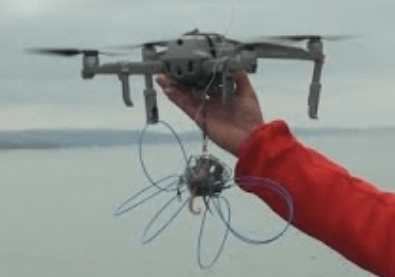
We are flying our snares with drones.
They work!
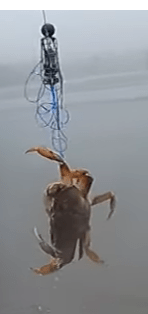
Flying Snares with a Drone
First, understand what a Crab Snare is. Then CLICK HERE to understand the Drone part.
What is a Drone?
It’s essentially just attaching some bait to a fishing line, with additional loops that “snare” the crab in a noose or loop as you reel them in. Due to the crab’s size, snares are primarily designed for Dungeness crabs. You can use a snare to catch blue crabs, but you might need a smaller one. Also, remember that using snares can be illegal in some states, so make sure you have done your research.
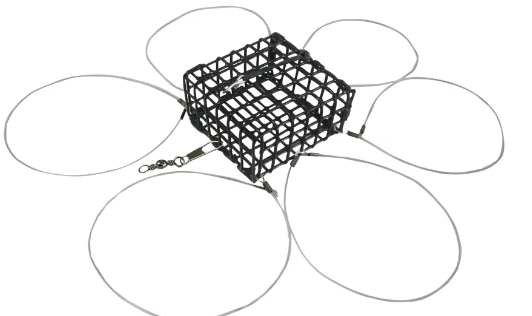
Crab snaring is a method used to catch crabs in coastal areas. It typically involves using a snare or a looped line attached to a long pole or rod. Here’s a general description of how crab snaring works:
Equipment
- Long pole or rod (often made of sturdy material like fiberglass),
- Rope or substantial fishing line length,
- A snare or loop is durable, such as wire or nylon.
Location
Locating the crabs: Look for areas where crabs are likely to congregate, such as rocky outcrops, jetties, piers, or shallow coastal waters. Crabs are often found near structures or in areas with ample food sources.
Using the Snare
- Preparing the snare: Attach the snare or loop to the end of the line or rope. The snare should be large enough to fit around the crab’s body but small enough to prevent it from escaping. Some snares have bait compartments to attract crabs, but this is optional.
- Hold the pole or rod with one hand and cast the snare into the water where you think the crab are living.
- Snaring the crab: Once the snare is around the crab, quickly and smoothly pull the snare upwards. The loop should tighten around the crab, preventing it from escaping.
- Retrieving the catch: Carefully lift the snared crab out of the water, keeping the snare secure. Avoid touching the crab directly, as some species have sharp pincers that can cause painful pinches.
- Release or store the catch: If you’re practicing catch-and-release, carefully remove the snare and gently release the crab back into the water. If you intend to keep the crab, place it in a suitable container, such as a bucket or a crab trap, ensuring it has enough water and space.
Remember to adhere to local regulations and restrictions regarding crab snaring. These may include size limits, catch limits, and specific crabbing seasons. Promoting sustainable fishing practices and respecting the ecosystem while enjoying this recreational activity is essential.
Sustainable Living Center of Oregon
We are an Education and Research Center based in Lincoln City, Oregon. The Center uses Permaculture, Off-Grid techniques, and Technology to find DO IT YOUR (DIY) methods of food production, water harvesting, energy production, shelter, community building, and health (keto lifestyle)
- Store Location
- 82 Siletz Hwy
- , Lincoln City, OR 97467
- 541-765-2109
- nextday@vol.com
- Main Office
- 1113 N Hwy 101
- Noon – 10 PM
- 365 days a year
- Depoe Bay, OR 97341
- 541-765-2109
- nextday@vol.com
82 Siletz Hwy Lincoln City OR 97367

 Living Center Oregon
You must be logged in to post a comment.