
Red Rock vs Dungeness vs Green Crabs
WARNING .. .Before one goes Crabbing, ONE needs to decide what kind of Crabs they want to catch. Each of the three bays has a different ratio of the Rock to Dungeness.
Three (3) types of Crabs to be caught in Oregon
Many imagine crabs as bright red—the color all crabs turn once cooked, no matter what they look like while alive. Red rock crabs have a bright red color pre-cooking, typically sporting a medium-to-dark red shell with large claws tipped with black.
Type of Crab you will catch in Lincoln City
- 99 % Dungeness Crab
- 1 % Rock Crab
- Some Green Crab
Type of Crab you will catch in Newport
- 50% Dungeness Crab
- 50% Rock Carb
- Some Green Crab
Type of Crab you will catch in Depoe Bay
- 5% Dungeness Crab
- 95% Rock Carb
- Some Green Crab
The type of Crab caught depends on the bottom of the Bay. Rock crabs are like bays with rocky bottoms.
Dungeness Crabs are like sandy bay bottoms with Ell Grass.
If the Bay has both a rocky and sandy bottom, you will catch both types of Crabs.
There are nearly no rocks in Siletz Bay.
Rock Crabs … 24 of any size or sex/day
.
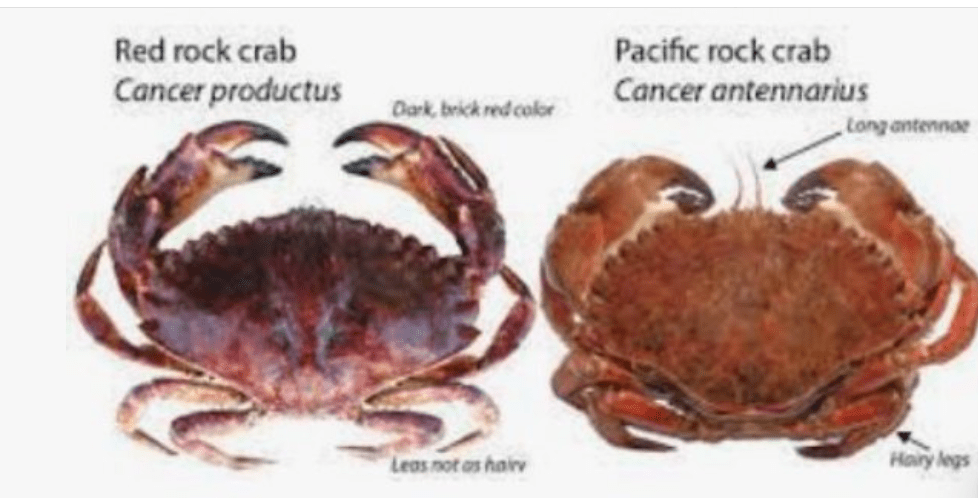
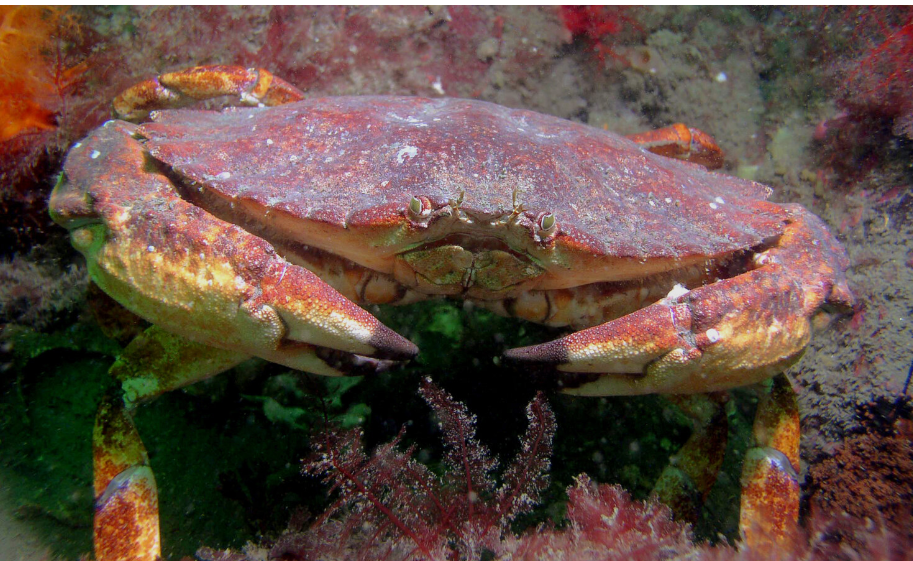
Rock crabs are smaller and don’t have quite as much meat in their bodies as the more popular Dungeness crabs, but their large, bulbous claws are full of meat. A giant rock crab can have almost as much meat as a lobster tail, just in the claws!
Rock crabs are harder to find in fish markets than Dungeness crabs, but they are plentiful and delicious. With wide, thick shells, a brick-red color, and only their large claws are full of meat, these crustaceans make fantastic table fare (but look out for their painful pinch – they don’t let go easily!).
Interestingly, Red Rock Crabs are known for cannibalism as they prey on smaller crabs in their habitat.
One cup of rock crab meat contains 120 calories, 28 grams of protein, 2 grams of fat, and 110 milligrams of cholesterol (via My Net Diary). It’s relatively high in sodium, reaching 540 milligrams per cup. It has a little calcium, about 120 milligrams, and 2.2 milligrams of iron.
Like other types of crab, rock crab contains long-chain Omega-3 polyunsaturated acids, These types of fatty acids may protect against heart disease and aid brain development; some studies suggest that they also might inhibit aggressive behavior. Crabmeat also serves as a rich source of selenium, a mineral that helps prevent damage to the body’s cells and tissues and plays an essential in the function of the immune system. You can’t go wrong with rock crab and the nutrition packed inside for a great boost.
Red Rock, with its sweet meat, is a tough shell-cracker’s delight. Dungeness? Juicy, bigger, and ready to be the star of your dinner plate.
Dungeness Crab …12 male with 5 3/4 inch measurement/day
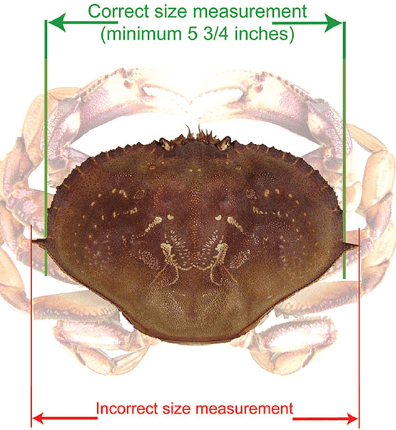
Dungeness…up to one (1) pound of meat/Crab. Much more significantignificant than the red rock crab, the Dungeness weighs up to 2 pounds on average. Most of this crab’s weight is mostly meat, which makes it the most sought-after.The Dungeness Crab is red but with more white patches. Along with the red rock crab, Since they are more popular, there is a limit of 12/day for males only larger than 5 3/4 inches. Much bigger than the red rock
Features: Dungeness crab can sometimes be confused with rock or other crab species. However, it is easily identified by its white-tipped claws and reddish-brown to purple color. Growing larger In their first 2 years, Dungeness crabs molt as many as 6 times a year! When they mature, between ages 2 and 3, this slows to about once a year.
This crab’s hard outer shell and sweet, succulent flesh make it popular as a seafood delicacy.
When it comes to size, the Dungeness crab can grow up to 10 inches across its carapace and weigh up to 2 pounds.
It is named after Dungeness, Washington State, where the first commercial harvest occurred in the late 1800s.
One unique aspect of Dungeness crab harvesting is the minimum size limit enforced by law—only males measuring over 5 3/4 inches (9 cm) from the tips of lateral spines across the back may be kept, as female crabs often carry eggs for future generations.
Both are popular seafood choices but have unique characteristics and benefits.
While Red Rock Crab is known for its sweeter meat with a delicate flavor, Dungeness Crab has a more robust and succulent taste.
The crabs’ size may also differ; Dungeness crabs are typically larger than red rock crabs. Male crabs take roughly four years to reach legal harvest size (5 3/4 inches across the shell back), while female crabs are never harvested. Protecting the breeding process is vital to the industry.
Regarding cooking, both types of crab can be prepared in several ways.
However, due to its thicker shell, the Dungeness Crab takes longer to steam or boil than the Red Rock Crab.
On the other hand, Red Rock Crab’s smaller size makes it easier to handle and crack open.
Besideseir taste and cooking methods, price is another consideration when deciding between Red Rock Crab and Dungeness Crab.
Dungeness crabs are more expensive due to their larger size, while red rock crabs are more affordable.
European green crabs … 35 of any size or sex/day They are caught everywhere.
European green crabs, as the name suggests, are native to Europe. But the hearty, tolerant crustaceans have also made themselves at home on both coasts of North America.
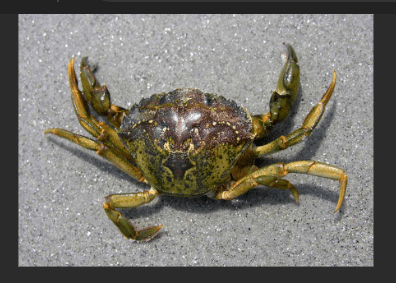
Researchers and agency folks agree that educating the public about identifying this pernicious invader is important. The first thing to know is that green crabs aren’t necessarily green.
“There’s a lot of color variation in the European green crab. See, this one is very orange and red,” said Summer Henricksen of ODFW, pointing out an example for the “Oregon Field Guide” camera. “Compare that with this one, which is also a green crab. It’s kind of a yellow-tan. They can also be quite green. So, using color, it’s impossible to correctly identify them.”
There is a sure-fire way of telling a native Dungeness from an invasive green crab. European green crabs in that they have three bumps in between their eyes, and then they have five spines on either side of their eye. Dungeness crab have 10 spines. And it doesn’t change with age or color, so it doesn’t lead to the same misidentification concerns,
Green crabs have incredible tolerances for temperature. They can be much warmer than our native crabs can and thrive. They’re also pretty successful in cold temperatures,
Green crabs also tolerate different water salinity levels, making them feel at home in open seas, estuaries, and even fresh water. Their flat hind legs make them good swimmers. To top it off, European green crabs possess a set of solid claws that make it easy for them to slice into clam shells and crush the carapaces of lesser-equipped crabs.
Green crabs also tear up eelgrass beds, which are naturally clean ocean water; they eat eelgrass, the home of the Dungeness Crab. absorb climate-warming carbon, produce oxygen, and provide habitat for sea birds, young Dungeness crabs, and other juvenile species. Loss of the grasses disrupts not just fish nurseries but the ecosystem as a whole.
European green crabs… invasive crabs that do not belong in Oregon They have no value; you catch them, and we compost them.
Adult crab shell (carapace) width is 2-4″. Best identification characteristics:
.3 bumps between the eyes 5 spines on each side of the carapace
The color can be green, black, or yellow on top of the carapace and white, yellow, orange, or reddish undersides and leg joints.
.

82 Siletz Hwy Lincoln City OR 97367

 Living Center Oregon
You must be logged in to post a comment.