
Alpaca Magic

Are you looking for a way to give your young seedlings a burst without relying on harmful chemical-laden fertilizers?
We have a solution for you! Give your seedlings a drink of alpaca magic every two weeks, and they will love it! We raise Alpacas for their thick, warm fleece and use their beans (manure) as an all-natural fertilizer for everything we plant. From giving our young seedlings a boost in the spring to helping our container gardens thrive all season long, not one bean goes to waste.
How much should you use?
- Alpaca Magic works great for young seedlings, container gardens, raised beds, and houseplants.
- Water seedlings every two weeks to ensure healthy root growth and lush green leaves.
- Houseplants do well with a once-a-month watering schedule.
- On a bi-monthly feeding schedule, container gardens and raised beds will stay lush all season.
- Sprinkle fresh beans around shrubs and trees to provide a slow-release, all-natural fertilizer for your plants all year.
Why it works:
- Alpaca beans (manure) are green and do not require age before use. The manure is not hot and will not burn your plants if it comes in contact with the tea or dried beans.
- It has high levels of nitrogen & potassium, major plant nutrients.
- The tea is safe for vegetables since Alpacas are not known to carry E-Coli 157.
- Alpaca manure has a very low odor, which makes it a pleasant fertilizer to work
Is Alpaca Manure Good for Composting?
We sell Alpaca manure (beans)
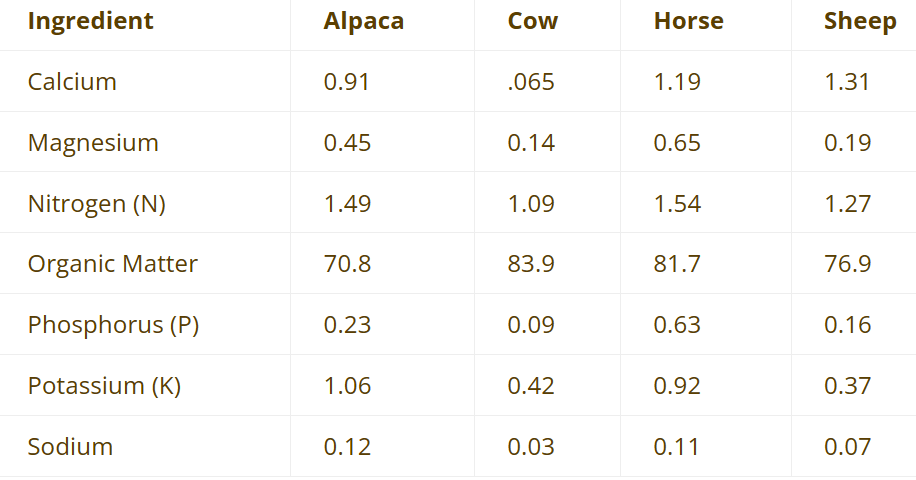
If you’re an alpaca farmer, add alpaca and horse manure to your compost to boost the nutrients. While alpaca droppings aren’t as nutrient-dense as other animal manure, such as cow, chicken, rabbit, or horse manure, they’re still valuable.
Alpaca bean material, or alpaca manure, has lower organic matter content than other livestock manure. Despite this, it’s still an excellent alternative to chemical fertilizers when applied directly or made into alpaca compost.
Some growers use raw alpaca manure as a soil amendment because it is milder. However, others choose to include fresh manure in the compost pile to increase the quality of their finished compost.
How to Make Alpaca Manure Compost
Composting alpaca manure is uncomplicated, especially if you already have a compost pile or bin. If you have an existing composter, dig a couple of layers deep and turn in the alpaca beans. Llama and alpaca poo are ideal additions to increase nutrient density and add structure to compost.
Be sure to add a carbon source, such as wood shavings, if your pile appears mushy or smells due to the dung’s moisture and nitrogen. Though it might be tempting, never use weeds in your compost, as this may spread weed seed in your garden.
Alpaca Tea Fertilizer Recipe
Manure tea is perfect for those with access to paca poo or composted alpaca waste but prefers a liquid fertilizer. Though some garden centers sell alpaca poop tea bags, making your own alpaca manure tea to nourish your garden plants without spending money is simple.
How to make Alpaca Tea:
- Find a gallon-sized container with a lid.
- Add 1 cup of alpaca beans to the container.
- Fill with warm water and screw the lid back on tightly.
- Let the tea brew for 24 or 12 hours in the sun, or until it is a rich tea color.
- Strain tea in another container and feed your plants.
- Sprinkle used beans around outside plants, or add to your compost pile.
- If you are looking for a natural way to feed your plants, without harmful chemicals, then give Alpaca Tea a try…your plants will love you for it!
- 2# Bag – $10.00 plus $5.00 shipping.
- Each 2# bag will make 10 gallons of Alpaca Majic.
- Alpaca beans (manure) are gathered straight from the pasture and may contain small pieces of hay and grass.
82 Siletz Hwy Lincoln City OR 97367

 Living Center Oregon
You must be logged in to post a comment.